Introduction
Choosing the right attendance system is critical for institutes looking to automate their operations. Both RFID and face recognition have their strengths — let's break them down.
RFID Attendance
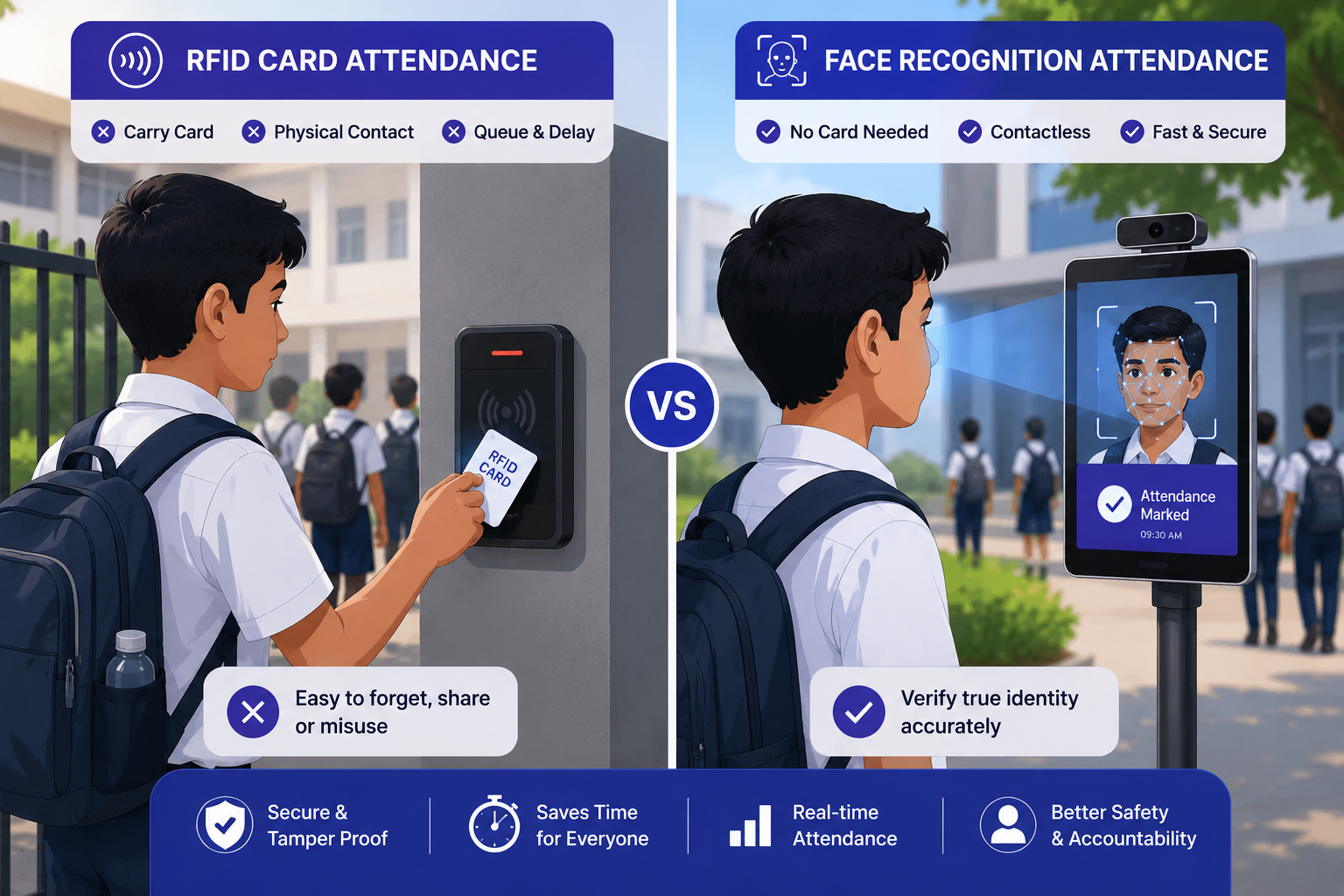
RFID (Radio Frequency Identification) uses physical cards or tags that students/employees tap on a reader device. It's reliable, fast, and works in all lighting conditions.
Pros
- Low cost per student (cards are inexpensive)
- Works in any lighting condition
- Fast — tap and go in under 1 second
- No privacy concerns
Cons
- Cards can be lost, shared, or forgotten
- Proxy attendance is possible
- Requires physical hardware at entry points
Face Recognition Attendance
Face recognition uses AI to identify individuals through their facial features. It's contactless and eliminates proxy attendance entirely.
Pros
- No cards to lose or forget
- Eliminates proxy attendance completely
- Contactless — ideal post-COVID
- Can work with existing cameras
Cons
- Requires good lighting
- Initial setup cost is higher
- May have accuracy issues with masks/changes in appearance
Which Should You Choose?
For schools with younger students, RFID is often simpler. For corporate offices and coaching institutes, face recognition offers better security. Many institutes use both — AttendanceGuru supports hybrid setups where you can use RFID for daily attendance and face recognition for exam halls or secure areas.
Conclusion
Both systems dramatically reduce manual work and errors. The best choice depends on your budget, security needs, and environment. AttendanceGuru supports both technologies out of the box, so you can start with one and add the other later.